





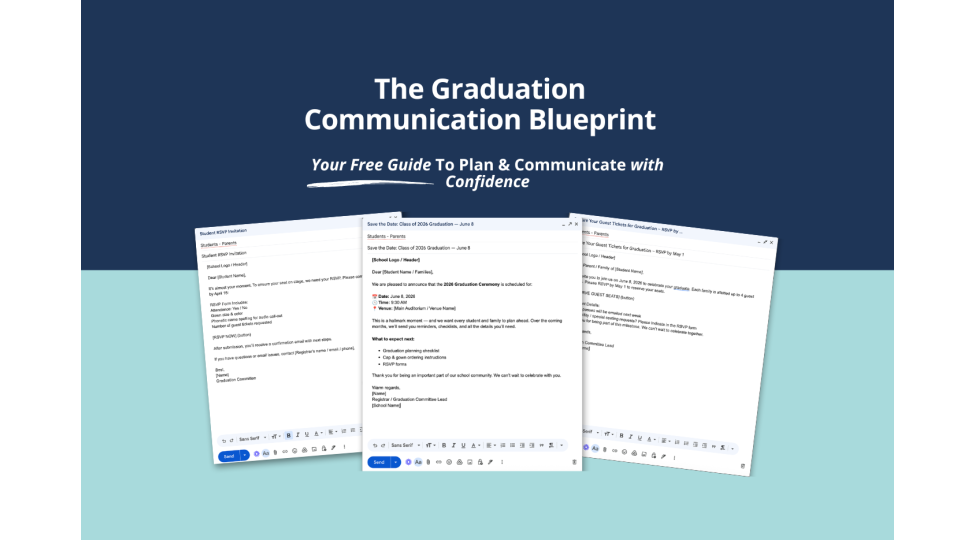
Graduation is one of the most emotional milestones in a school year — a day that honors dedication, growth, and community. But behind every seamless ceremony is something far less glamorous — and far more powerful: clear, timely, and thoughtful communication.
When communication works, everything feels effortless. Students show up prepared, families beam with pride, and staff feel the joy of a job well done. When it doesn’t, stress takes over.
This blueprint is built for school graduation committees to help you plan every message, every reminder, and every “we did it!” moment with confidence.
By the end, you’ll have:
- A step-by-step communication timeline
- Ready-to-send email templates
- Tone and style tips
- A downloadable Graduation Communication Template Pack to keep your plans on track
Why Communication Defines a Great Graduation
A beautiful ceremony isn’t built in a day. It’s built through months of messages — reminders, confirmations, and encouragements that bring order and energy to the journey.
Strong communication does three things:
- Reduces stress — everyone knows what’s happening and when.
- Builds pride — families feel included in the process.
- Strengthens connection — students, staff, and committees move in sync.
At RGV College, Allied Health Lead Ana Gonzalez, NCMA starts graduation planning months ahead. Her secret? Proactive communication.
“Communication and collaboration are key. We work closely with instructors, staff, and committees to make sure every detail is covered.”
Ana Gonzalez, Allied Health Lead
Her team’s biggest challenge was getting confirmations from students and volunteers. The solution? Frequent reminders, clear instructions, and open channels — ensuring no detail was missed.
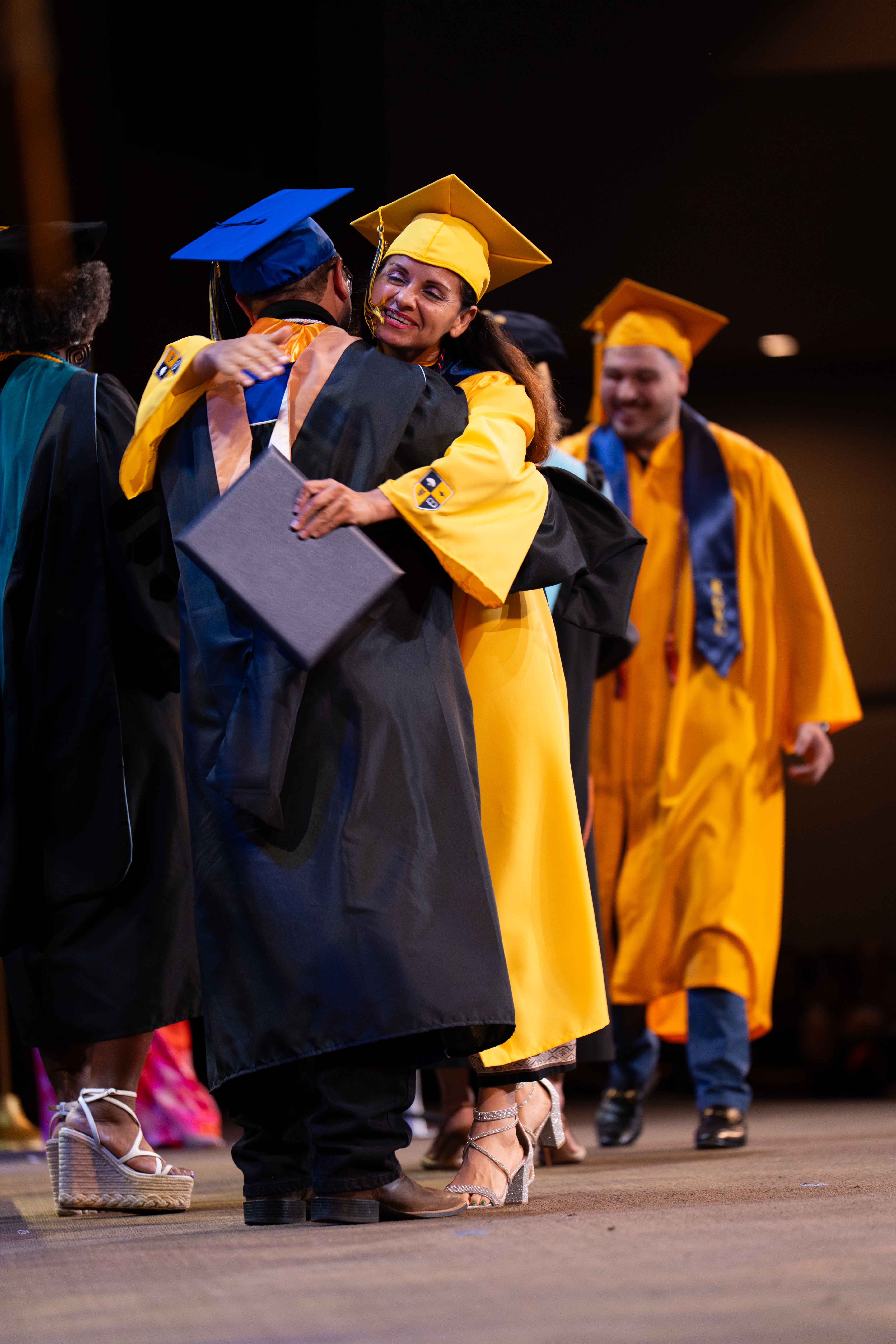
The result: a ceremony full of smiles, hugs, and proud families — because communication turned chaos into coordination.
Common Graduation Communication Mistakes and How to Fix Them
- Late communication. Never miss a communication date. Without it, families panic, students rush, and vendors scramble.
- Scattered messages. Parents can miss key information buried in multiple emails. Be clear and consistent about the schedule and communications.
- Inconsistent tone. Mixed messages confuse parents. Keep your tone steady and consistent and people will have a good journey.
- No RSVP follow-ups. Seat counts and logistics fall apart without confirmations. Be sure to nudge students and parents for RSVPs.
- Overly formal language. Students disengage, parents skim when things are too stiff and formal. Keep it clear, focused and light to read.
The Graduation Communication Timeline
Your graduation success begins with a clear communication map. Here’s the full six-phase plan schools can follow:
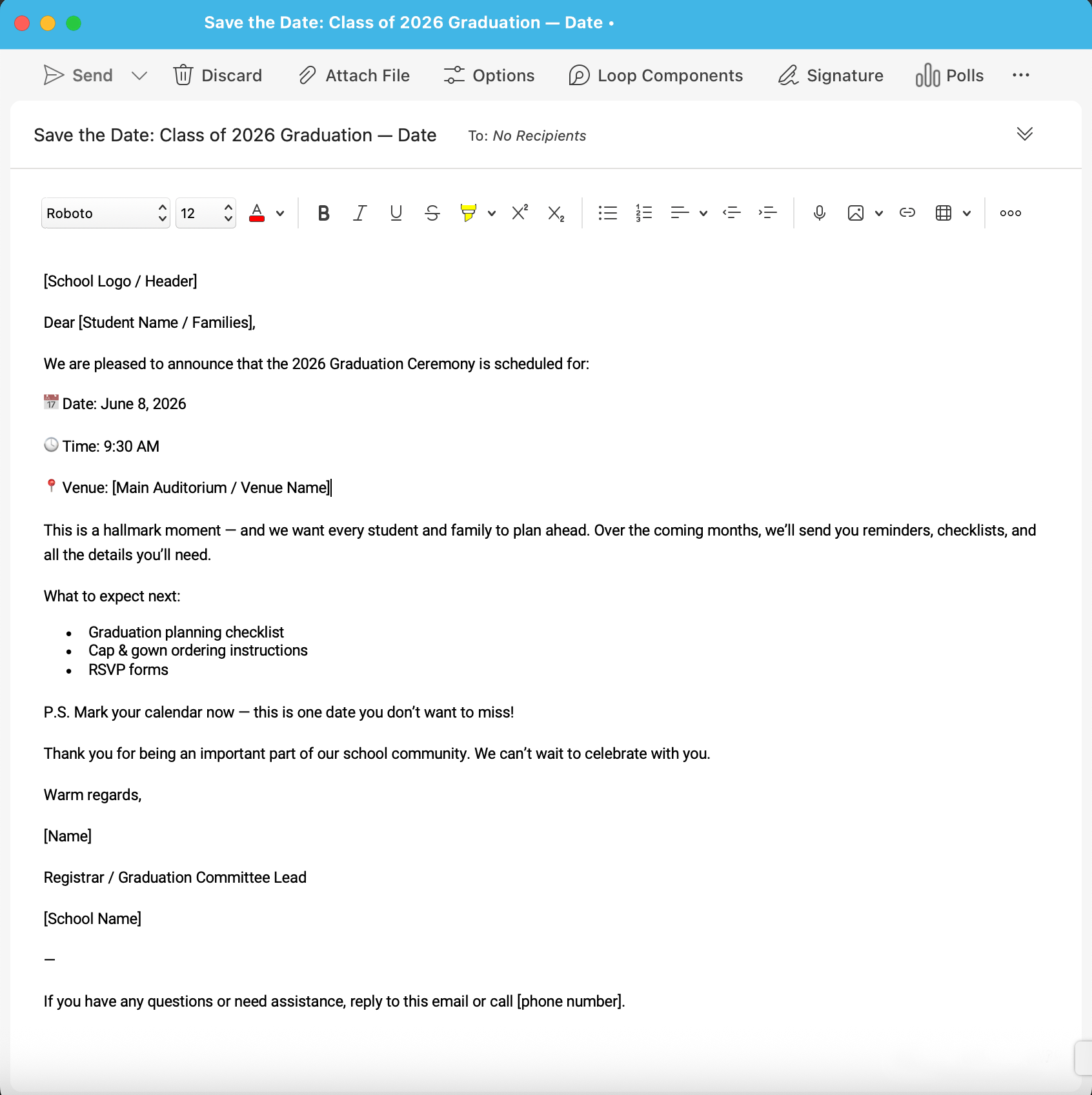
Phase 1: Planning & Preparation (3–6 Months Before)
Goal: Build awareness and excitement early.
What to Send:
- Save-the-Date
- Graduation Checklist
- Cap & Gown Order Information
- Portraits Announcement
- Key Deadline Reminders
Quick Checklist:
✔️ Confirm ceremony date & venue
✔️ Share initial timeline
✔️ Open cap & gown ordering
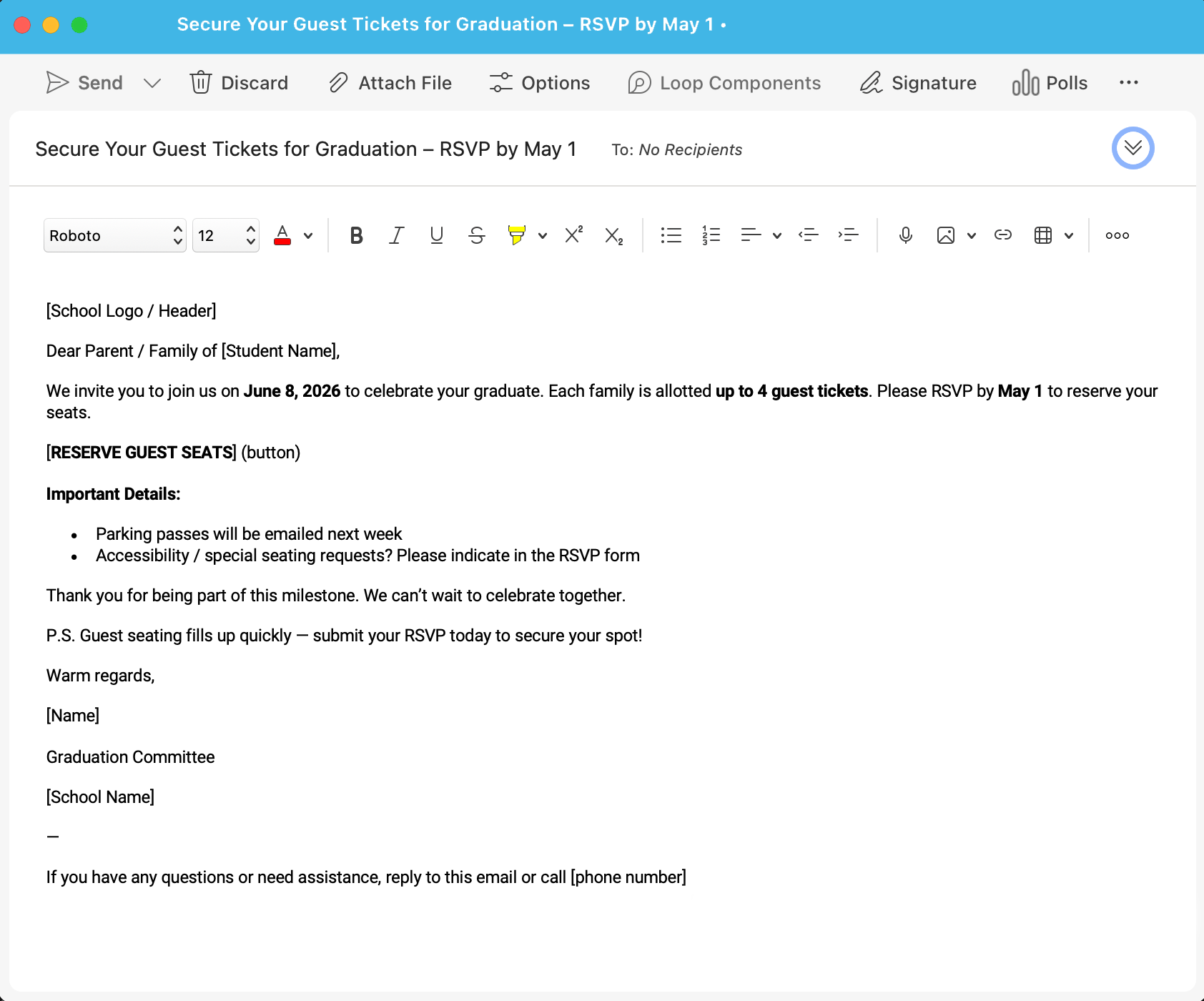
Phase 2: RSVP & Confirmation (4–8 Weeks Before)
Goal: Confirm who’s attending and collect key details.
What to Send:
- Student RSVP Form
- Parent/Guest RSVP Form
- Confirmation Email
Quick Checklist:
✔️ Attendance confirmation
✔️ Gown sizes & guest counts
✔️ Seating and accessibility needs
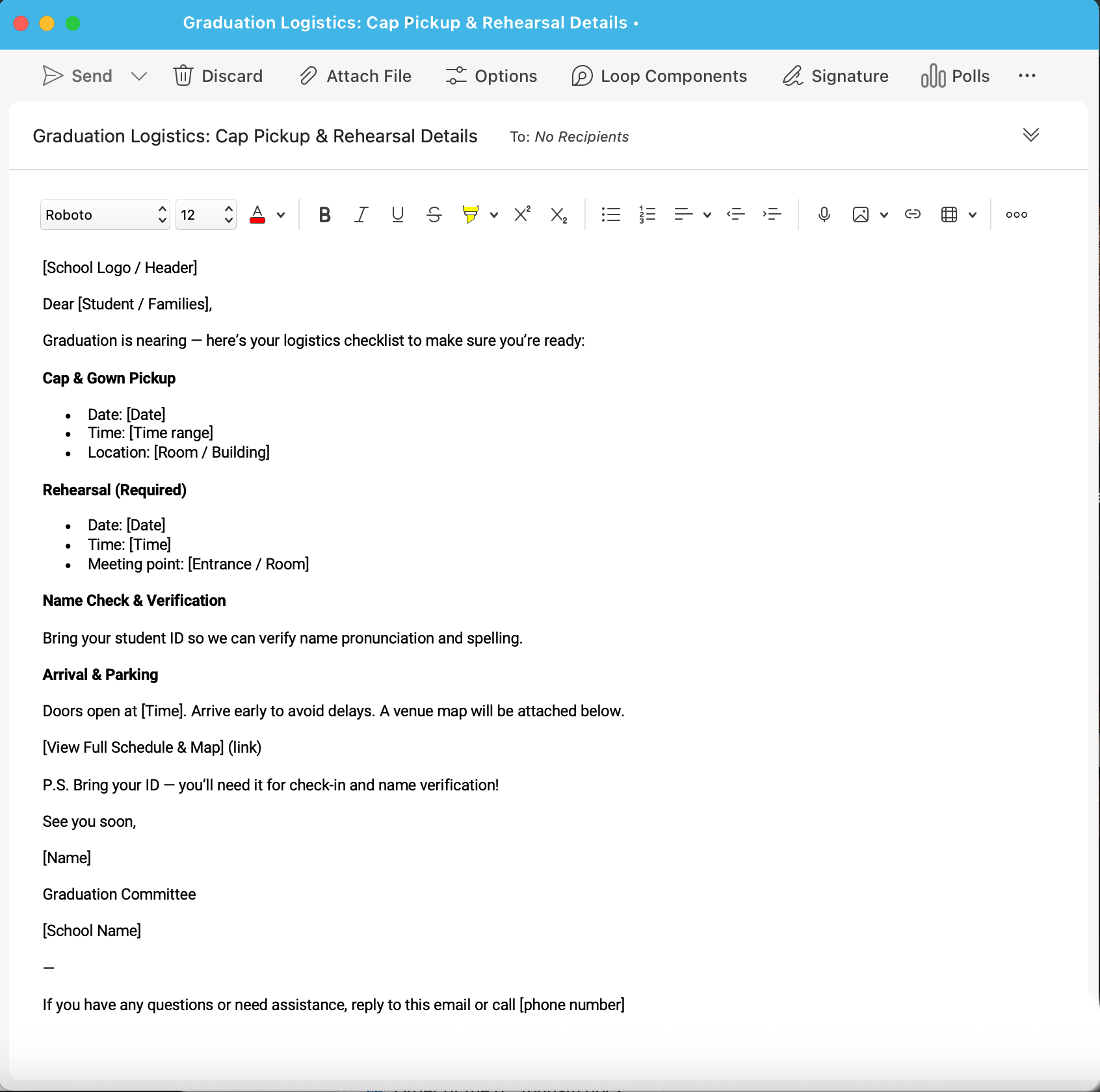
Phase 3: Logistics & Reminders (1–2 Months Before)
Goal: Eliminate confusion and boost organization.
What to Send:
- Pick-up details for caps & gowns
- Rehearsal schedule
- Name verification reminder
- Parking and arrival guide
Quick Checklist:
✔️ Confirm order distribution dates
✔️ Publish rehearsal times
✔️ Send map or directions
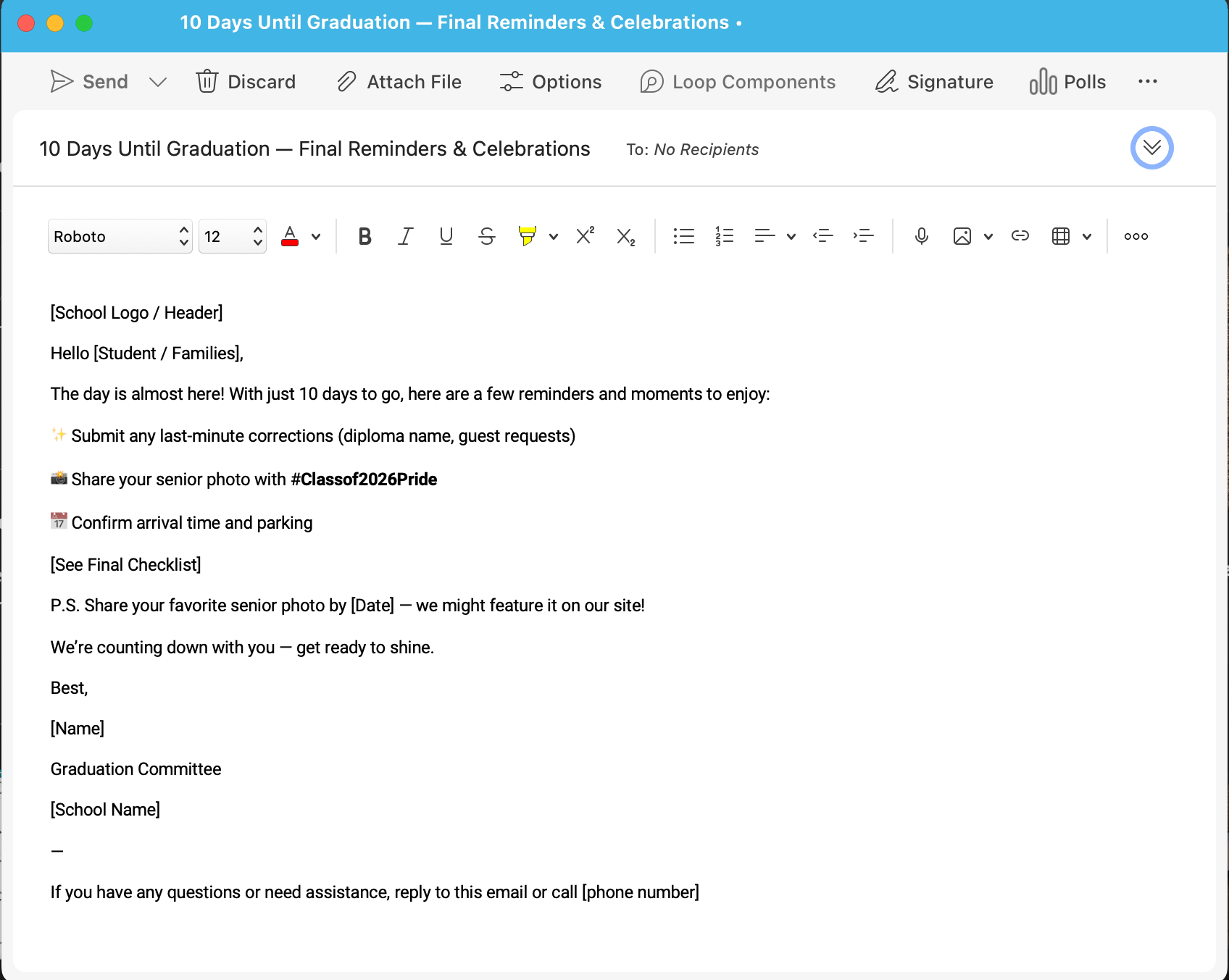
Phase 4: Celebration & Spirit-Building (2–3 Weeks Before)
Goal: Spark pride and excitement.
What to Send:
- Countdown emails
- Senior Spotlights
- Principal or Dean messages
- Photo and social sharing invites
Quick Checklist:
✔️ Schedule countdown sequence
✔️ Highlight senior achievements
✔️ Encourage community participation
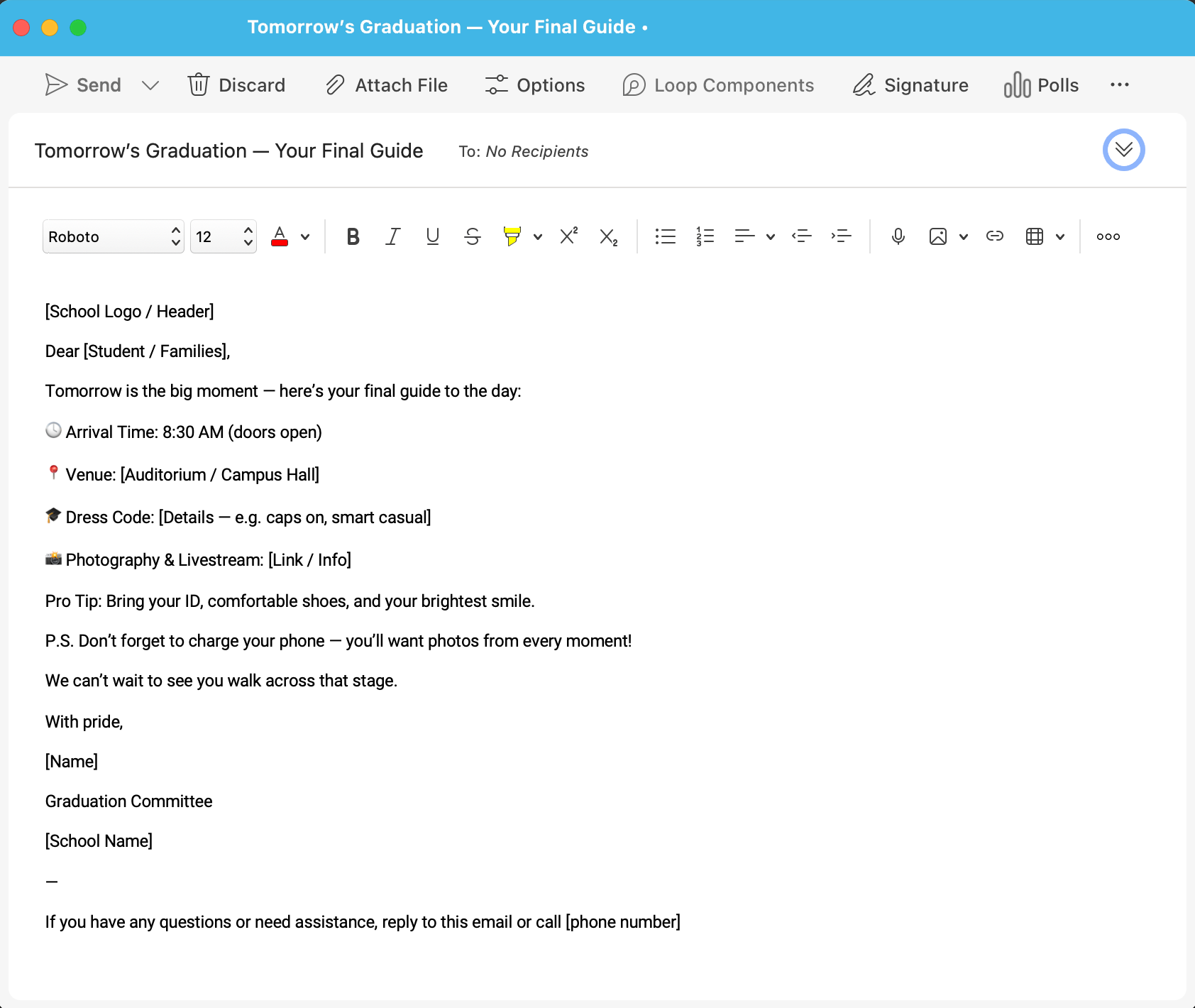
Phase 5: Final Reminders & Day-Of Emails
Goal: Provide last-minute clarity and calm.
What to Send:
- Day-before reminder
- Day-of logistics
- Livestream links
Quick Checklist:
✔️ Confirm final logistics
✔️ Share arrival times
✔️ Test livestream access
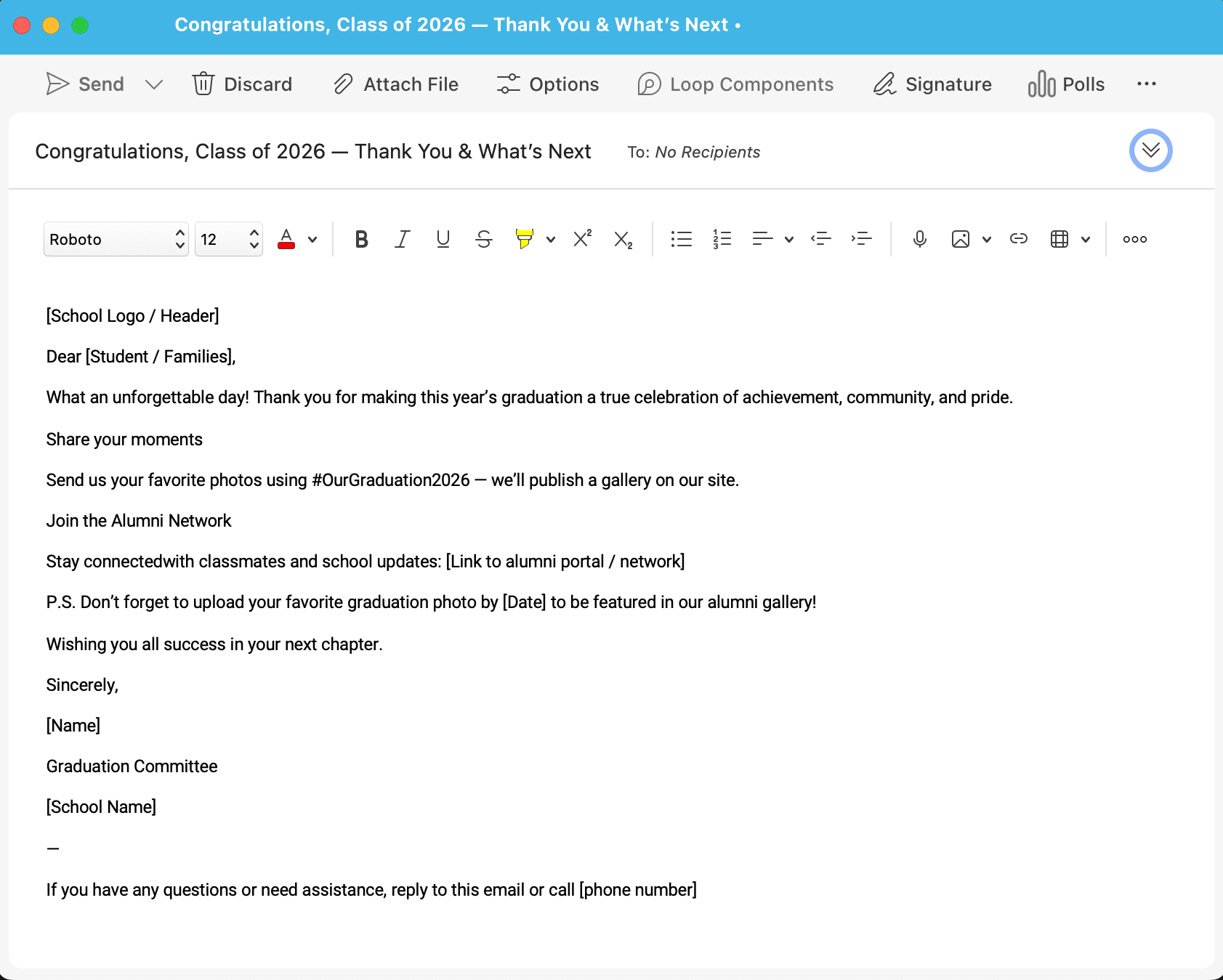
Phase 6: Post-Graduation Follow-Up (1–3 Days After)
Goal: Wrap up the celebration and keep community connection alive.
What to Send:
- Thank-you email
- Photo sharing invite
- Alumni welcome message
Quick Checklist:
✔️ Send appreciation message
✔️ Share photo gallery
✔️ Invite graduates to alumni network
Tone & Style Tips for Graduation Communication
- Keep it human. Write like you’re talking to someone proud, busy, and emotional.
- Be clear before clever. Avoid jargon — make every line instantly understandable.
- Stay visually consistent. Use the same colors, font, and tone across all your emails.
- Balance authority with warmth. You’re leading an event, but you’re also celebrating people.
Pro tip: End each message with an emotion — pride, gratitude, or excitement — not just logistics.
Lessons from RGV College
At RGV College, the graduation process runs like clockwork — but not by accident.
“GraduationSource provided excellent support. The quality, customization, and timely delivery made everything smooth and stress-free.”
Ana Gonzalez, Allied Health Lead
- Frequent communication with staff and students.
- Early planning using detailed checklists and reminders.
- Staying people-focused — remembering graduation is about pride, not just process.
The result?
Smiles, gratitude, and a ceremony that felt effortless.
Your Next Step
You’ve now got the full blueprint — from first announcement to final thank-you.
But to make it even easier, we’ve bundled everything for you.