






Graduation Speech Writing
Writing a graduation speech is a rare opportunity to speak for an entire class. You’re addressing peers, families, and educators who all experienced this chapter differently, yet arrived at the same moment together. The goal isn’t to sound impressive. It’s to sound genuine.
A strong graduation speech avoids clichés, respects the audience’s time, and delivers a message that feels honest and shared. The guidance below breaks the process into simple, manageable steps so your speech feels intentional instead of overwhelming.
Quick checklist before you write:
- Time limit: confirm how long you have and aim slightly under.
- Audience: classmates, families, and staff - keep it inclusive.
- Goal: one clear message, supported by a few real moments.
- Tone: sincere, hopeful, and lightly funny if that’s your style.
Brainstorm Your Message and Theme
Before writing anything, spend time reflecting. The most effective graduation speeches are rooted in real moments, not generic advice. Think about experiences that shaped you during school, especially ones that challenged your assumptions or changed how you see success.
Once you’ve listed several moments, look for overlap. Do multiple stories point toward resilience, friendship, adaptability, or growth? Identifying one or two core themes gives your speech focus and prevents it from feeling like a collection of unrelated anecdotes.
Helpful reflection prompts:
- What experience best represents our class?
- What lesson only became clear near the end?
- What moment still feels meaningful today?
- Who helped me become who I am now?
A simple way to pick your theme:
- Circle the 2-3 stories you’re most comfortable telling.
- Write one sentence for what each story teaches.
- Choose the theme that shows up in at least two stories.

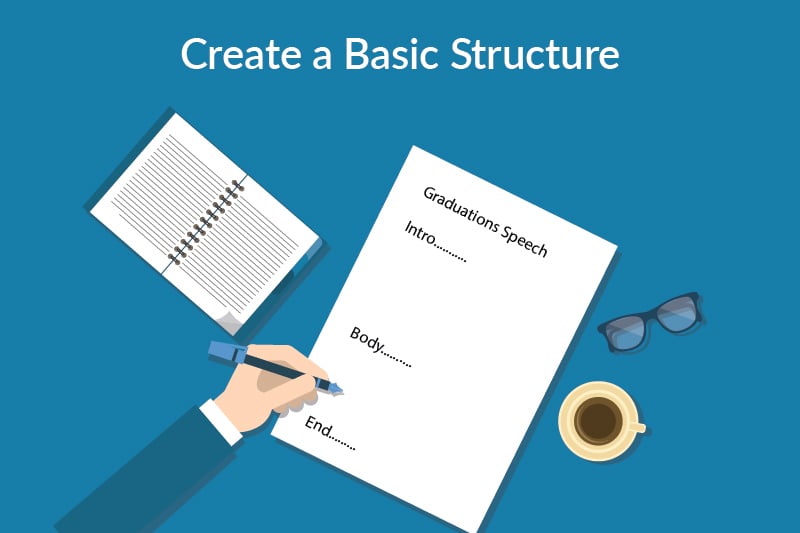
Structure Your Graduation Speech
Structure keeps your message clear and your delivery confident. Without it, even a great idea can lose impact. Your goal is not to say everything, but to say a few things well.
A proven speech outline:
- Opening (30-60 seconds): hook + your theme in one sentence.
- Body (2-5 minutes): 1-3 stories that support your theme.
- Close (30-60 seconds): the takeaway + a hopeful forward-looking line.
Keep your stories tight: set the scene, share the moment, and tie it back to the theme. If a detail doesn’t move the story forward or make the lesson clearer, cut it. Tight speeches feel confident.
What to avoid:
- Inside jokes only a few people will understand
- Long lists of names (thank people broadly instead)
- Overly formal language that doesn’t sound like you
- Heavy topics without a hopeful landing
What works well:
- One clear message repeated in different ways
- A short story that the audience can picture
- A moment of humility or honesty
- A forward-looking close that feels earned
Write a Memorable Opening and Conclusion
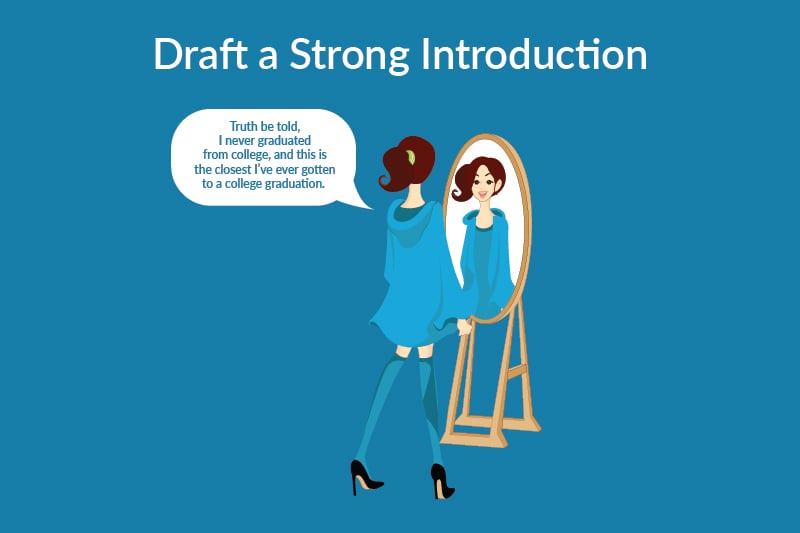
Graduation ceremonies are long, emotional, and often outdoors. By the time you speak, attention is limited. Your opening should acknowledge the moment and invite the audience in, not demand energy they don’t have.
Strong opening strategies:
- A brief, honest moment that feels relatable
- A shared experience your class went through
- A simple question that sets up your theme
- A short story that begins immediately (no long setup)
A simple hook template:
“If there’s one thing this class proved, it’s [theme]. Let me tell you about a moment that made that real for me.”
Your conclusion is where you make the speech matter. Don’t introduce brand-new ideas at the end. Instead, return to your theme, state the lesson clearly, and connect it to what comes next for your classmates.
A strong ending does three things:
- Restates the theme in a fresh, simple sentence
- Connects it to the future beyond school
- Ends with confidence - not a trailing apology

Final delivery tips:
- Practice out loud at least twice - timing changes when spoken.
- Pause on purpose. Silence makes your words land.
- Speak slower than you think you need to.
- Look up regularly - connection matters more than perfect lines.