






Graduation Announcements
The months leading up to graduation are packed - final exams, capstone projects, senior events, and all the emotions that come with closing a chapter. Graduation announcements often get pushed to the bottom of the list, but they’re one of the simplest ways to share your milestone with the people who supported you.
This guide covers modern graduation announcement etiquette for both high school and college: what to include, how to design it so it looks polished, who to send it to, and when to mail it so it arrives with enough time.

Quick difference to know:
- Announcement: shares the achievement - no RSVP expected.
- Invitation: invites someone to attend a ceremony or party - RSVP expected.
The Value of Graduation Announcements
Graduation announcements do more than share a date. They acknowledge the people who helped you get here, and they become a keepsake families hold onto for years. They also help you stay connected beyond the ceremony - especially with relatives and family friends who might not see your graduation post on social media.
There’s also a practical upside: graduating often means internships, job searches, and new opportunities. A well-made announcement quietly signals “I’m stepping into my next chapter.” That’s not about asking for favors - it’s about letting your community know what you’re proud of and where you’re headed.

Best reasons to send them:
- Share your milestone with extended family and mentors
- Give loved ones a keepsake they’ll actually save
- Include a photo and a short personal note
What announcements are not:
- A demand to attend (no RSVP needed)
- A request for gifts (avoid any wording that implies it)
- A long life update (keep the card clean and simple)
How to Design a Graduation Announcement
Good graduation announcement etiquette starts with clarity. The design should feel polished and readable, with the key details easy to scan. If you keep the layout simple and prioritize your photo, the announcement will look professional even without fancy formatting.

Include these basics:
- Graduate’s full name
- School name (high school, college, or university)
- Graduation year (and ceremony date if you want)
- Degree and major (optional, but common for college grads)
Simple design tips:
- Use one or two readable fonts - avoid overly decorative scripts
- Keep the text short so your photo is the focal point
- Leave white space so the card feels clean, not crowded
- Proofread names and school spelling twice
Envelope etiquette:
- Address envelopes by hand when possible
- Use dark ink for readability
- Insert the announcement so the photo faces up when opened
- Add a return address - it avoids lost mail headaches
Optional: add a personal touch
A short handwritten note goes a long way, especially for grandparents, mentors, and relatives you don’t see often. Keep it simple: a quick thank-you or a sentence about what the milestone means to you.
Choosing the Recipients
First decide whether you’re sending an announcement, an invitation, or both. If you’re also hosting a graduation party with limited space, you may send invitations only to that smaller group, while announcements can go to a broader list without any pressure to attend.
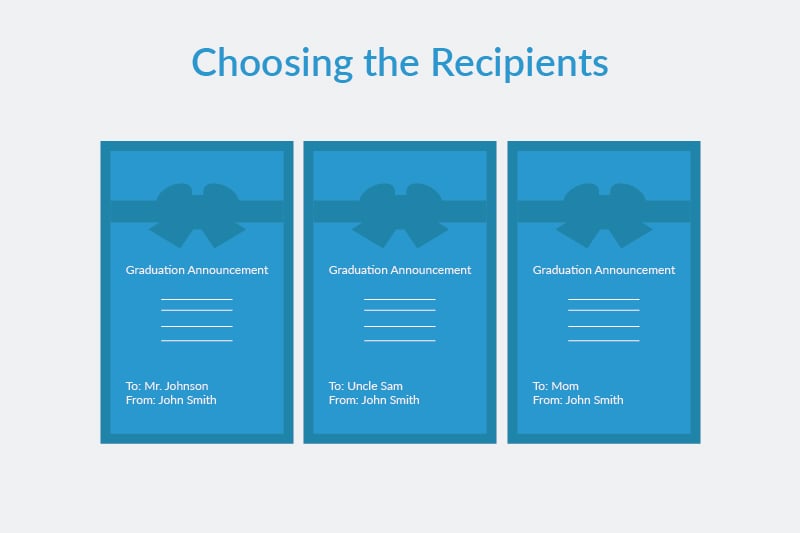
People to consider:
- Close family and extended relatives
- Family friends who watched you grow up
- Coaches, mentors, and teachers who made a difference
- Friends’ parents or neighbors who supported you
Simple rule to keep it stress-free:
If you’d be happy receiving an announcement from them, they’re probably a good fit for your list. Announcements should feel like an extension of real relationships, not a mass mailing.
High school announcements are often sent more broadly than college, but there’s no strict rule. Send them to the people you care about and the people who care about you. That’s the etiquette that matters.
Knowing When to Send
Timing matters. Your friends and family need time to plan, request days off, or book travel. Even if your announcement doesn’t require an RSVP, it’s still courteous to mail it early enough for loved ones to feel included.
A practical mailing timeline:
- Local recipients: mail 3 to 4 weeks before the ceremony
- Out-of-state travel: mail 6 to 8 weeks ahead
- International or major travel: let them know 2 to 3 months ahead
If certain family members are flying in, give them a heads-up first - then send the formal announcement after. Even if they already know the date, they’ll still appreciate having a keepsake to save.
Final tip:
Don’t wait until finals week. Draft your list early, order your announcements, and set aside one afternoon to address envelopes. You’ll feel instantly more prepared and your future self will thank you.