






Graduations don’t fall apart because planners are careless. They fall apart because reality is unpredictable.
Speakers run late. Caps disappear. Microphones die. Students forget tassels. Parking lots overflow. And here’s the truth experienced coordinators know: Ceremonies rarely break in obvious places. They break in the tiny details nobody planned for.
This is your operational guide to the most common failure points — and exactly how to prevent and manage them - not if they happen, but when they happen (because they will).
The Graduation Failure Map
These are the real-world breakpoints ranked by impact level:
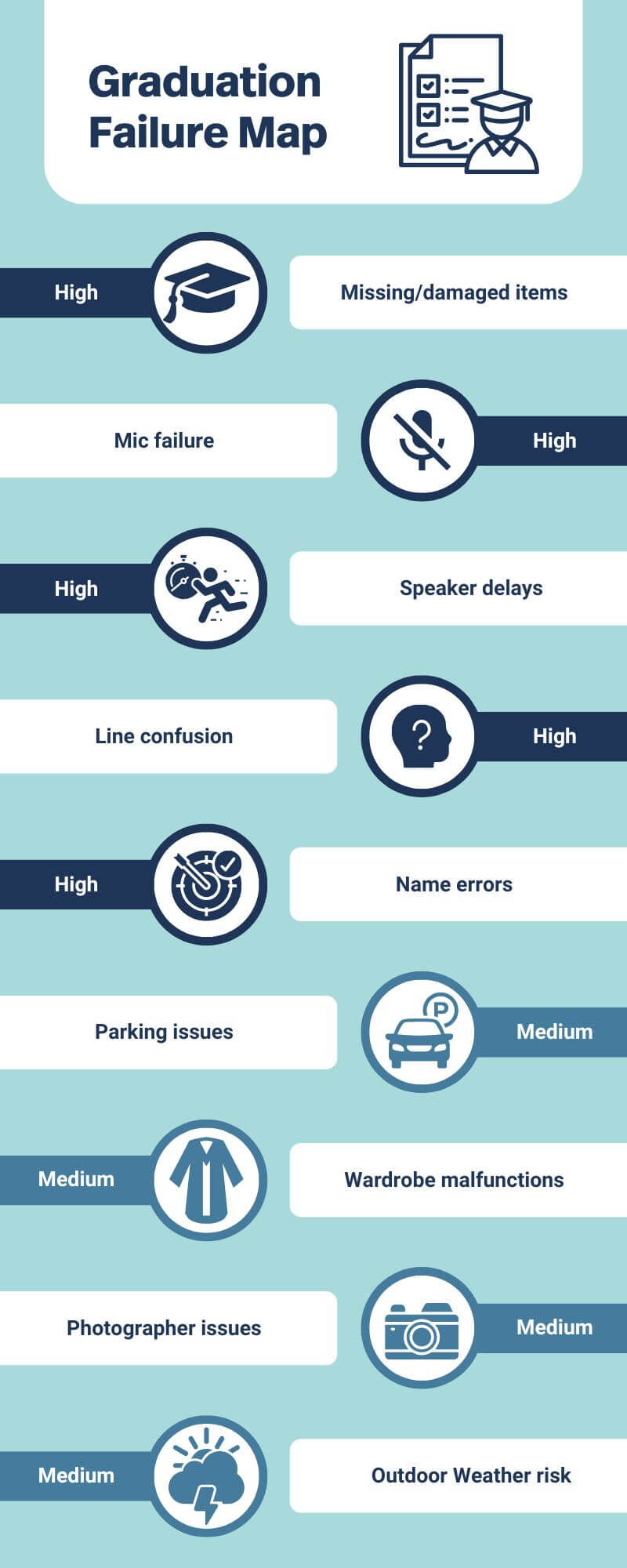
Focus on high-impact risks first. That’s where pros win.
Failure Point #1 — Regalia Problems
What breaks
- Students forget caps or tassels in cars
- Wrong sizes
- Torn gowns
- Missing accessories
- No extras available
Why it happens
Most schools order exactly what they need — not what reality requires.
Prevention Checklist
- ✔ Order 3–5% extra regalia
- ✔ Keep spare tassels + caps backstage
- ✔ Set up a “fix station” table with:
- bobby pins
- safety pins
- lint roller
- tape
- scissors
- ✔ Assign one staff member as Regalia Captain
Red Flags
- Students asking sizing questions on the ceremony day
- The staff said, “I think we ordered enough.”
- No backup inventory on site
Failure Point #2 — Audio & Mic Breakdowns
What breaks
- Dead mics
- Feedback noise
- Low volume
- Battery failure
Prevention Checklist
- ✔ Two microphones minimum
- ✔ Backup batteries on podium
- ✔ Full rehearsal sound check
- ✔ Backup wired mic (not wireless)
Red Flags
- No rehearsal test with the full sound system
- Only one microphone on site
- No technician present
Failure Point #3 — Speaker Delays
What breaks
Speakers run late. Traffic happens. Flights get delayed. VIPs forget timelines. Programs stall. The audience waits.
Prevention Checklist
- ✔ Require arrival 60 minutes early
- ✔ Confirm arrival morning-of via text
- ✔ Print program with flexible order
- ✔ Have one standby speaker
Red Flags
- The speaker hasn’t confirmed the day of
- No direct phone number
- Only email contact
Failure Point #4 — Photography Disasters
What breaks
- Photographer cancels
- Batteries die
- SD cards fill
- Missed key moments
Prevention Checklist
- ✔ Contract backup photographer
- ✔ Require dual camera setup
- ✔ Require spare batteries + cards
- ✔ Confirm arrival time the day before
Red Flags
- The photographer is solo with one camera
- No written agreement
- No equipment redundancy
Failure Point #5 — Name Pronunciation Errors
What breaks
- Names mispronounced
- Students pause awkwardly on stage.
- Audience reacts
- Emotional moment turns uncomfortable.
Why it happens
Name readers see names for the first time during the ceremony.
Prevention Checklist
- ✔ Collect phonetic spellings during registration
- ✔ Offer audio pronunciation submissions
- ✔ Conduct name-reading rehearsal
- ✔ Highlight complex names on master list
- ✔ Provide reader with printed + digital list
Red Flags
- Reader says, “I’ll just figure it out.”
- No phonetic guide
- Names only exist in spreadsheet format.
Failure Point #6 — Line Flow Breakdowns
What breaks
- Students walk out of order
- Long pauses between names
- Stage congestion
- Diplomas handed to the wrong person
Why it happens
There is no physical flow system — only verbal instructions.
Prevention Checklist
- ✔ Floor markers for standing positions
- ✔ Numbered line cards
- ✔ Assigned line captain
- ✔ Stage exit coordinator
- ✔ Full walk-through rehearsal
Red Flags
- Staff saying, “Just follow the person in front of you.”
- No physical markers
- No one is assigned to control the line
Failure Point #7 — Program Errors
What breaks
- Misspelled names
- Missing graduates
- Incorrect honors
- Wrong titles
Why it happens
Programs are edited too late and proofed by only one person.
Prevention Checklist
- ✔ Two-person proof rule
- ✔ Final roster deadline
- ✔ Lock file 72 hours before printing
- ✔ Send final list confirmation email
- ✔ Keep digital correction list onsite
Red Flags
- “Just one quick change” requests after approval
- Print vendor waiting on the final file
- No signed final list
Failure Point #8 — Parking Chaos
What breaks
- Traffic jams
- Late guests
- Delayed ceremony start
- Frustrated families
Prevention Checklist
- ✔ Map overflow lots
- ✔ Send parking map email
- ✔ Add signage volunteers
- ✔ Schedule arrival windows
Red Flags
- No parking instructions sent
- No traffic volunteers
- The venue says, “Parking should be fine.”
Failure Point #9 — Weather Plan Gaps (Outdoor Ceremonies)
What breaks
- Rain delays
- Heat exhaustion
- Wind blowing caps/programs
- Ceremony postponement
Why it happens
Weather plans exist “mentally” — not operationally.
Prevention Checklist
- ✔ Written weather decision deadline
- ✔ Backup indoor venue confirmed
- ✔ Shade + hydration stations
- ✔ Wind-safe podium setup
- ✔ Communication plan ready
Red Flags
- No official rain decision time
- Staff are unsure who makes the call.
- Backup venue not secured.
Failure Point #10 — Seating Miscalculations
What breaks
- Not enough chairs
- VIP seats missing
- Families separated
- Late start while adding seats
- No accessible seating for elderly or disabled guests
Why it happens
Capacity estimates rely on assumptions instead of verified counts, and accessibility needs are often considered too late. Most venues give you a maximum number. But maximum capacity doesn’t equal functional seating. And accessibility isn’t optional — it’s operational.
Prevention Checklist
- ✔ Physically count chairs
- ✔ Add 10% buffer seating
- ✔ Label reserved sections
- ✔ Confirm VIP list the day before
- ✔ Assign seating usher
- ✔ Pre-designate accessible seating areas near aisles and exits
- ✔ Ensure clear pathways for wheelchairs and mobility devices
- ✔ Communicate accessibility accommodations in advance registration materials
Red Flags
- The venue says, “It should be enough.”
- No seating chart exists
- Extra chairs unavailable
- Accessibility requests are handled reactively instead of proactively
- Guests are asking staff where accessible seating is located
The Master Prevention System (What Pros Do Differently)
Experienced planners don’t try to prevent problems. They build systems that absorb problems. Here’s their framework:
The 4-Layer Safety Model
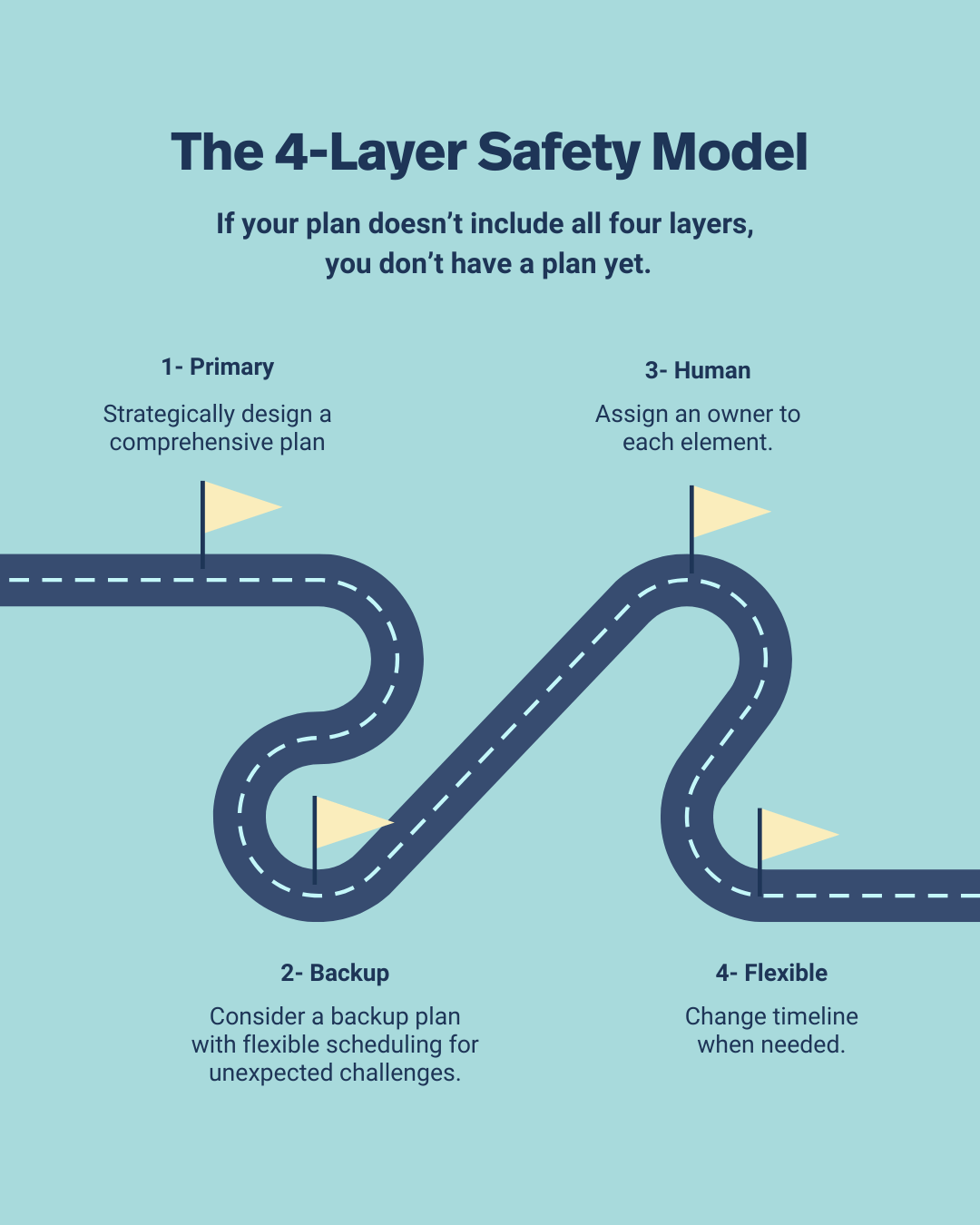
If your plan doesn’t include all four layers, you don’t have a plan yet.
The 10-Minute Final Walkthrough Checklist
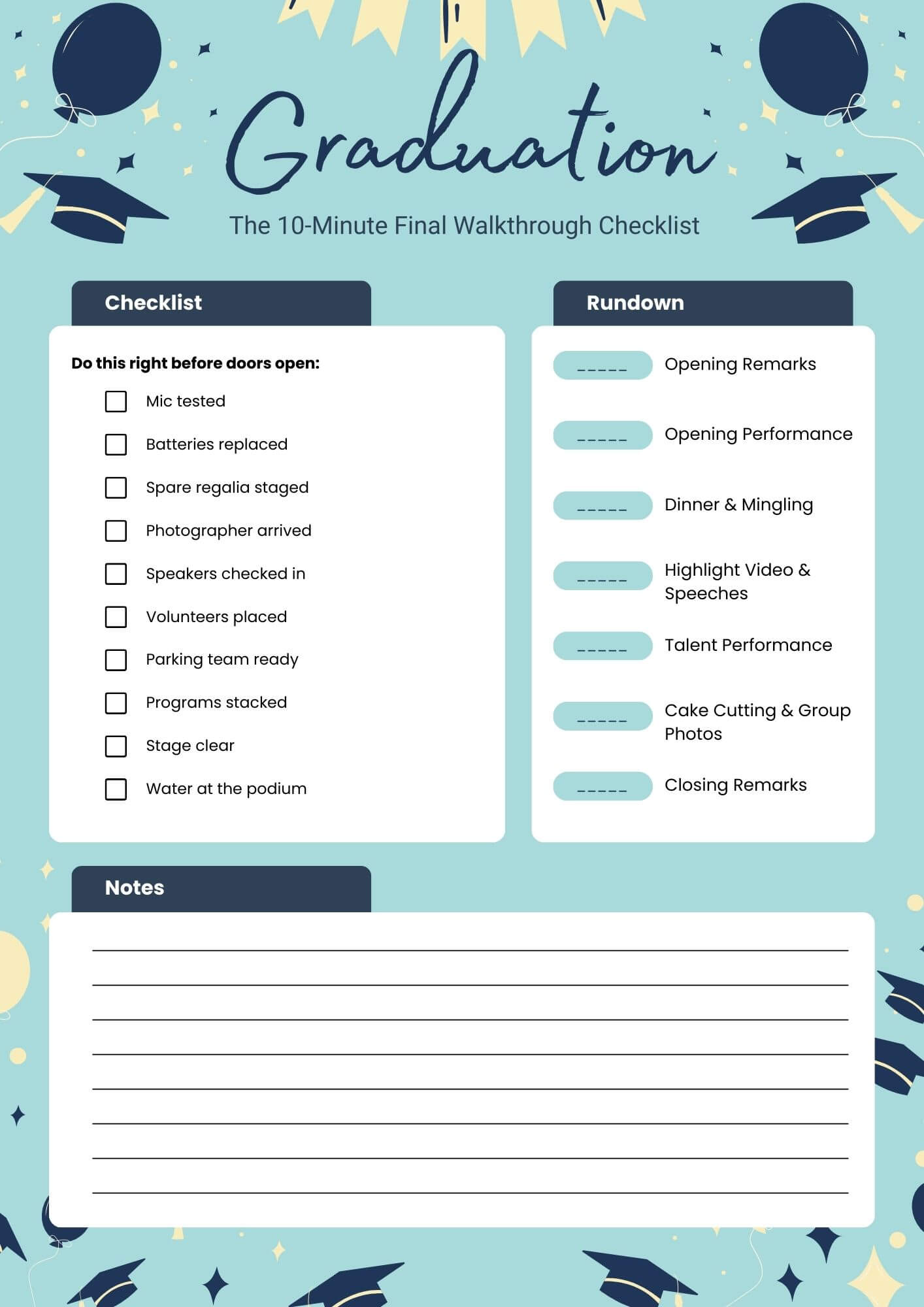
Do this right before doors open:
- Mic tested
- Batteries replaced
- Spare regalia staged
- Photographer arrived
- Speakers checked in
- Volunteers placed
- Parking team ready
- Programs stacked
- Stage clear
- Water at the podium
If you can’t confirm one of these, fix it now.
The Real Secret Experienced Coordinators Know
Graduation success isn’t about perfection. It’s about preparation density. The more micro-preparations you build in, the fewer macro-problems you face.
Or said another way: Calm ceremonies are engineered.