





What does a graduation cap and gown actually cost your students—and how much of that price is determined by the way your institution purchases and distributes it?
For many schools, graduation product pricing is shaped by agreements established years ago. Campus bookstores manage regalia sales, academic departments purchase recognition accessories independently, and existing supplier contracts are renewed without necessarily examining the final cost to students. While these arrangements may serve important operational needs, they can also make it difficult to identify opportunities for better pricing and purchasing efficiency.
The difference between what a supplier charges and what a student ultimately pays deserves closer attention. Retail markups, distribution fees, separate departmental purchases, and ordering requirements can all influence graduation expenses, sometimes without being visible to the teams responsible for planning commencement.
For procurement professionals, graduation coordinators, and school administrators, reviewing these costs is an opportunity to improve affordability without compromising product quality or institutional traditions. The starting point is understanding where graduation costs originate, who controls them, and whether the current purchasing model still delivers the best value for students.
Do Schools Know What Students Actually Pay for Graduation?
Many institutions have a clear understanding of their direct graduation expenses, including venue arrangements, event production, staffing, and ceremony logistics. However, student-facing costs can be more difficult to evaluate when purchases are handled outside the institution's central procurement process.
For example, a university may negotiate a regalia agreement with a supplier while a campus bookstore manages sales and distribution. Academic departments may separately require recognition accessories, and some programs may have additional regalia requirements. Students experience these costs as part of one graduation, even when the institution accounts for them through different departments.
A useful starting point is to calculate the total cost of required graduation products for each student group.
| Graduation Product | What Schools Should Review |
|---|---|
| Caps and gowns | Required purchase price, material specifications, sizing, and distribution fees |
| Tassels and academic hoods | Whether items are included in regalia packages or priced separately |
| Honor cords and stoles | Which items are required, optional, or provided by the institution |
| Diploma covers | Whether costs are covered by the school or passed to students |
| Custom regalia | Additional costs associated with embroidery, institutional branding, or degree-specific requirements |
| Shipping and handling | Delivery charges, processing fees, and expedited shipping costs |
This review helps institutions distinguish between necessary graduation expenses and costs that may be reduced through more efficient purchasing arrangements.
It also makes it easier to identify inconsistencies. Two students graduating from different departments within the same institution may face different costs because their programs use separate suppliers or ordering methods.
Understanding these differences is an important first step toward improving affordability.
How Bookstore Markups and Distribution Models Affect Regalia Prices
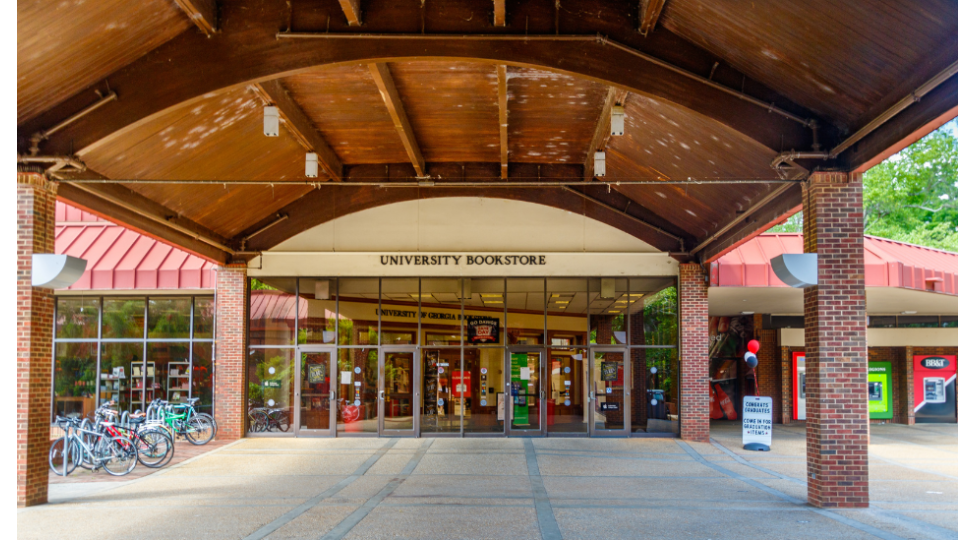
Campus bookstores have traditionally played an important role in graduation purchasing. They provide a familiar location for students, coordinate product availability, and may offer in-person assistance with sizing, exchanges, and distribution.
However, the price students pay through a bookstore may differ from the supplier's original product price.
Depending on the agreement, retail pricing can reflect operating expenses, inventory management, staffing, distribution services, and the bookstore's margin. These costs may be reasonable for the services provided, but institutions should understand how they affect student affordability.
For example, a school may focus on negotiating a competitive wholesale regalia price without reviewing the final retail price charged to graduates. If the institution doesn't have visibility into that difference, it may be difficult to determine whether students are receiving the best available value.
Before renewing a bookstore or supplier agreement, procurement teams should ask how retail prices are established, what services are included, and whether alternative distribution arrangements could achieve similar outcomes at a lower cost.
Direct student ordering is one option worth evaluating. Depending on the institution's requirements, an online ordering model may reduce the need for certain inventory-handling or retail processes. However, shipping charges, customer service, returns, and administrative responsibilities must still be considered.
GraduationSource offers Student Ordering Portals that allow institutions to provide a dedicated online purchasing experience for approved graduation products.
The objective isn't necessarily to replace campus bookstores. It's to compare distribution models using the total student price, service quality, convenience, and administrative requirements rather than assuming the existing arrangement is the most cost-effective.
Are Multiple Departments Paying Different Prices for Similar Products?
Graduation purchasing often extends beyond the central commencement office. Academic departments, student organizations, bookstores, and individual campuses may purchase recognition products independently.
This decentralized approach can create inconsistencies in pricing, product specifications, and supplier agreements.
Consider a university where several colleges order custom stoles and honor cords from different vendors. Each department may receive reasonable pricing for its individual order, but the institution may be missing opportunities to coordinate purchasing volumes or establish shared product specifications.
The same issue can arise across school districts where individual high schools purchase graduation regalia separately despite having similar requirements.
A coordinated purchasing review can identify overlapping suppliers, compare prices for equivalent products, and determine whether combining compatible orders could provide better value.
For larger institutions, Strategic Spend Analysis can help reveal purchasing patterns across departments, including supplier overlap, fragmented spending, and potential opportunities for consolidation.
However, coordination should not eliminate legitimate differences between academic programs. Institutions may need to preserve distinctive regalia colors, degree-specific accessories, or established graduation traditions.
As discussed in our article, One Graduation Ceremony, Five Vendors: Is There a Better Way?, the goal is not necessarily to work with fewer suppliers. It is to create a purchasing strategy that reduces unnecessary complexity while maintaining the flexibility departments need.
Could Earlier Ordering Help Reduce Graduation Costs?
Graduation purchasing becomes more difficult when institutions wait until the final months before commencement to confirm product requirements and place orders.
Late purchasing decisions may limit supplier options, increase the likelihood of expedited shipping, or create additional administrative work when orders need to be corrected.
Custom products can be particularly sensitive to ordering timelines because production may require design approvals, specialized materials, or additional manufacturing time.
Schools can reduce these risks by aligning procurement schedules with graduation planning milestones.
For example, academic departments can confirm recognition-product specifications early in the school year, while commencement teams establish ordering deadlines based on anticipated graduate counts and supplier production requirements.
Institutions should also review historical purchasing data to improve forecasts. Previous graduate counts, sizing patterns, and replacement-order volumes can provide useful information when planning the next purchasing cycle.
Early planning does not guarantee lower prices, but it creates more opportunities to compare suppliers, negotiate terms, and avoid unnecessary rush charges.
The Graduation Planning Playbook provides a framework for coordinating budgets, vendor responsibilities, ordering schedules, and other commencement preparations throughout the academic year.
Are Students Paying for Products They Don't Actually Need?
Graduation packages can simplify purchasing by combining multiple items into one order. However, schools should periodically review what those packages include and whether every item is necessary for ceremony participation.
For example, a package may contain required academic regalia alongside optional accessories or keepsakes. If the distinction isn't clear, students may assume they must purchase the entire package to participate.
Institutions should work with suppliers to separate required products from optional purchases wherever practical.
This can improve pricing transparency and help students make informed decisions based on their budgets.
Schools should also evaluate whether certain items can be provided through institutional funding, reused where appropriate, or offered through assistance programs.
For example, some institutions maintain regalia lending programs or provide financial support for students who cannot afford required graduation attire. These arrangements require careful planning around sizing, cleaning, inventory, and distribution, but they may improve access to graduation participation.
Affordability doesn't always require changing suppliers. Sometimes, it begins with reviewing purchasing requirements and making sure students are only expected to pay for what is genuinely necessary.
How to Evaluate Graduation Vendors Beyond the Quoted Price
A lower product price doesn't automatically represent better value.
Schools must also consider product quality, delivery reliability, ordering convenience, customization capabilities, and the supplier's ability to resolve problems before the ceremony.
An inexpensive gown that arrives late or requires replacement may ultimately create more expense and administrative work than a slightly higher-priced product from a dependable supplier.
Similarly, a vendor offering competitive bulk pricing may not be the best choice if its ordering process creates confusion for students or requires significant manual coordination from school staff.
Before renewing a supplier agreement, institutions should evaluate the complete relationship.
| Evaluation Area | Key Question |
|---|---|
| Student affordability | What is the final price students pay for required products? |
| Pricing transparency | Are all product, shipping, and service charges clearly disclosed? |
| Product quality | Do materials, sizing, and customization meet institutional standards? |
| Ordering experience | Can students easily identify and purchase the correct products? |
| Delivery reliability | Does the supplier consistently meet agreed deadlines? |
| Flexibility | Can the vendor accommodate late additions, replacements, and program-specific requirements? |
| Administrative efficiency | Does the purchasing process reduce or increase staff workload? |
This approach helps procurement and commencement teams identify suppliers that offer sustainable value rather than focusing exclusively on the lowest initial quote.
Our guide, What Schools Should Ask Before Renewing Their Graduation Vendor, provides additional questions institutions can use when evaluating existing supplier agreements and considering alternatives.
Five Questions Every School Should Ask About Graduation Affordability
Institutions don't need to overhaul their entire graduation purchasing process to begin improving affordability. A focused review can reveal where students may be paying more than necessary.
Start with five questions:
- What is the total required graduation product cost per student? Include academic regalia, mandatory accessories, applicable fees, and distribution charges.
- How is the final student price determined? Understand supplier pricing, bookstore arrangements, and any additional retail or service charges.
- Are departments purchasing similar products independently? Identify opportunities to coordinate compatible orders and compare pricing.
- Could another ordering or distribution model provide better value? Evaluate direct ordering, institution-managed distribution, and existing bookstore services.
- Are we reviewing student affordability before renewing supplier agreements? Make the student experience part of annual procurement evaluations rather than an afterthought.
These questions provide a practical foundation for discussions between procurement, Student Affairs, graduation coordinators, finance teams, and academic departments.
Making Graduation More Affordable Without Compromising the Experience
Graduation products carry academic and institutional significance. Caps, gowns, hoods, and recognition accessories represent years of achievement and traditions that schools want to preserve.
Improving affordability should not mean compromising those standards.
Instead, schools can look for opportunities to simplify purchasing, improve price transparency, coordinate departmental requirements, and choose suppliers that balance quality with reasonable costs.
GraduationSource works with educational institutions to provide academic regalia, recognition products, custom graduation solutions, and student ordering options. Schools reviewing their purchasing arrangements can explore how GraduationSource supports graduation programs and assess which solutions may fit their institutional requirements.
The most effective approach begins with understanding the true cost of graduation participation and ensuring that purchasing decisions reflect both institutional priorities and student needs.
Final Thoughts
Schools invest considerable time and resources into creating meaningful graduation ceremonies, but the affordability of required graduation products deserves the same attention as event logistics and institutional budgets.
When purchasing arrangements are fragmented, retail pricing is unclear, or supplier contracts are renewed without review, students may face costs that could potentially be avoided.
By examining total student expenses, evaluating distribution models, coordinating departmental purchasing, and reviewing supplier performance, institutions can make better-informed decisions about graduation products.
The goal isn't simply to find the cheapest cap and gown. It's to ensure students receive the quality, service, and value they deserve without paying more than necessary to celebrate an achievement they've already earned.