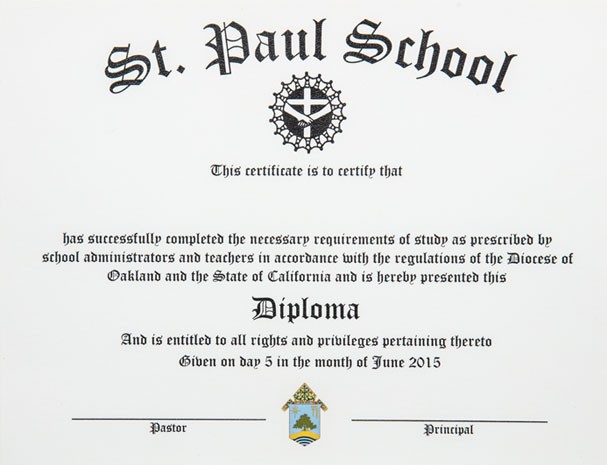






Designing a graduation diploma is a significant responsibility for a graduation coordinator, as it represents a tangible symbol of the graduates' achievements. GraduationSource offers many different styles and options to create the perfect certificate for your school’s needs. We offer high-quality in stock diplomas as well as fully custom designed certificates. Here's a guide to help you through the process:
Design Considerations
Font and Typography: Choose a legible, formal font. Traditional choices include serif fonts like Times New Roman or Garamond.
Paper Quality: Select high-quality, durable paper. Parchment paper is a common choice for its professional look and feel.
Layout: Typically, the school's name and logo are at the top, followed by a statement of conferment, the student's name, the degree awarded, and the date. Include signatures at the bottom.
Essential Information
Student Details: Ensure you have the correct spelling of all graduates' names and their degrees or honors.
Institutional Information: This includes the school name, logo, and any other relevant details like the school motto.
Understanding Significance
Recognize the Importance: Diplomas are more than just pieces of paper; they are a symbol of years of hard work and dedication. Understanding this will guide your approach to designing a thoughtful and respectful diploma.
Legal & Formal Elements
Accreditation: Ensure the diploma includes any required accreditation information.
Signatures: Diplomas usually feature signatures from key officials, like the president of the institution or the dean of the relevant faculty.
Seal or Emblem: Most diplomas include the school's official seal or emblem as a mark of authenticity.
What are the key design elements?
Graduation diplomas are formal documents that represent a significant academic achievement. They typically incorporate several key design elements, each serving a specific purpose and contributing to the overall aesthetic and authenticity of the diploma.
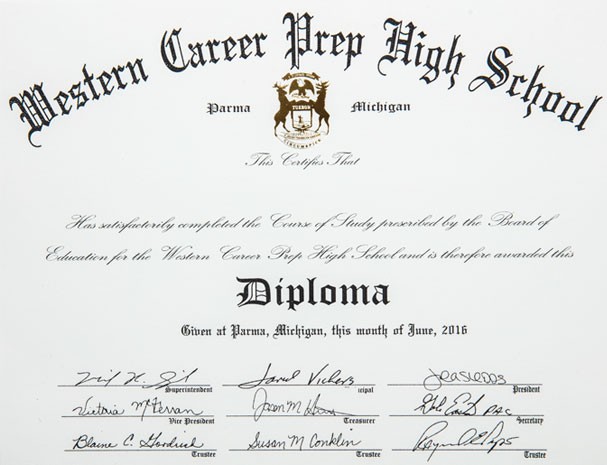
Institutional Name and Logo
Prominence: The name of the educational institution is usually the most prominent text on the diploma.
Logo or Crest: The school's logo, crest, or coat of arms is often featured, symbolizing the authority and heritage of the institution.
Title of the Achievement
Degree Title: This includes the specific degree earned, such as Bachelor of Arts, Master of Science, etc.
Field of Study: Sometimes the major or field of study is also mentioned.
Recipient's Name
Student's Name: The graduate's full name is displayed prominently, often in a larger font size than other text.
Personalization: This is a key element as it personalizes the diploma to the individual recipient.
Statement of Conferment
Conferment Language: A formal statement indicating that the degree is officially conferred upon the graduate.
Phrasing: Often includes phrases like "has been awarded," "has successfully completed," or similar.
Date of Issuance
Graduation Date: The date on which the degree is officially awarded, often the date of the graduation ceremony.
Signatures
Authority Signatures: Signatures from key officials of the institution, like the President, Chancellor, or Dean.
Authentication: These signatures authenticate the diploma as a legitimate document.
Institutional Seal or Emblem
Seal: A raised or embossed seal, or a printed emblem of the institution, often placed near the signatures.
Symbol of Authenticity: Acts as an official mark of the institution's endorsement.
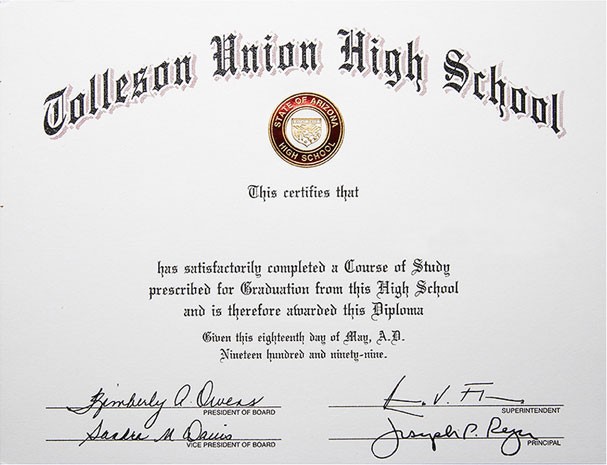
Decorative Elements
Borders: Ornate borders can frame the content, adding a formal and elegant touch.
Watermarks: Some diplomas include watermarks for added security and authenticity.
Accreditation Information
Accreditation Body: If relevant, the name of the accreditation body that recognizes the institution or program.
Enhances Credibility: This adds an extra layer of authenticity and recognition to the degree.
Paper Quality and Color
High-Quality Paper: Diplomas are usually printed on heavy, high-quality paper.
Color: Often a classic off-white, cream, or parchment color to give an elegant and timeless look.
Honors or Distinctions
Academic Honors: If applicable, honors such as summa cum laude, magna cum laude, or cum laude.
These elements together create a document that is not only a record of academic achievement but also a cherished keepsake for graduates. The design should balance tradition and formality with clarity and personalization to ensure that each diploma is a meaningful symbol of the graduate's hard work and success.
Browse some of our stock diploma products:




What are the significance of graduation diplomas?
Symbol of Achievement
Academic Milestone: A diploma is a tangible representation of the graduate's hard work, dedication, and perseverance in completing their academic program.
Recognition of Effort: It serves as a formal recognition of the effort and time invested by the student in their studies.
Credential Verification
Proof of Education: Diplomas act as official documentation of one's educational qualifications, necessary for employment or further education.
Authenticity: The presence of the institution's seal, signatures, and other formal elements verify the authenticity of the academic achievement.
Personal and Professional Milestone
Career Advancement: For many professions, having a diploma is a prerequisite for career advancement or even entry.
Personal Growth: The achievement of earning a diploma often contributes to a graduate's self-esteem and confidence.
Rite of Passage
Transition Symbol: Graduation and the receipt of a diploma symbolize a transition, often from student life to professional life or to advanced studies.
Ceremonial Importance: The diploma is a central element of graduation ceremonies, marking the culmination of an educational journey.
Institutional Reputation
Quality Indicator: The diploma also represents the educational quality and prestige of the issuing institution.
Alumni Status: Graduates become ambassadors of their alma mater, carrying its name and reputation with them.

Historical and Cultural Value
Tradition: Diplomas connect graduates to a long-standing academic tradition.
Cultural Significance: They often feature traditional and culturally significant designs, symbols, or language.
Legal and Professional Documentation
Legal Document: In many contexts, a diploma is a legal document that can be used to verify educational attainment.
Professional Requirement: Certain professions legally require the presentation of a diploma for licensing or certification.
Keepsake and Heirloom
Sentimental Value: For graduates and their families, diplomas hold sentimental value as a keepsake of an important life event.
Heirloom Quality: They are often preserved and displayed, serving as a lasting reminder of the graduate's accomplishment.
Motivation for Others
Inspirational Role: Seeing a family member or friend achieve a diploma can serve as motivation for others to pursue their educational goals.
Societal Benefit
Educational Promotion: Diplomas underscore the value of education in society and promote the pursuit of knowledge and learning.